When ordering paper bags, many businesses start with the question "which type of paper is best?". A more useful question is “what type of paper is right for my design and product?”. A beautiful paper background for colorful images may not create a rustic feel, and a thick sheet of paper is not enough to ensure the bag can bear the load well.
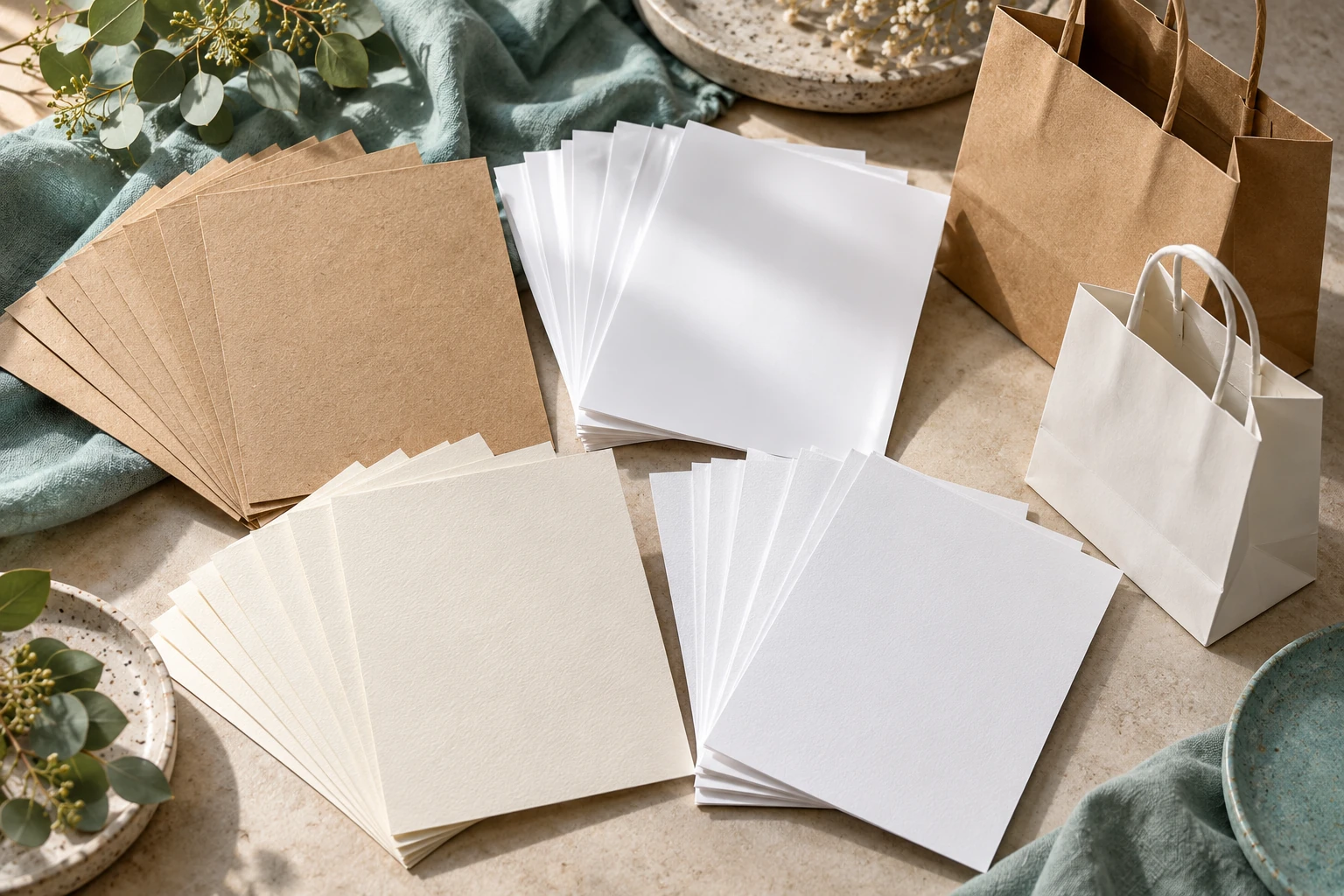
Kraft, Couche, Ivory and Bristol are common names on quotes. Each group has many paper codes, so you need to see the correct form intended to be used for the order. The decision should be based on the actual sample, the specifications of the paper code and the finished bag.
Compare the surface and properties of each type of paper
| The type of paper commonly known in the market | Common directions for use | Things to see on the sample |
|---|---|---|
| Kraft | Rustic design, few colors, priority given to natural paper colors | Background color, ink contrast, fiber structure |
| Couche | The design requires a coated surface and visual representation | Gloss or matte, printing color, scratch marks after processing |
| Ivory | The bag needs an upright shape and a clearly printed surface | Coated surface, thickness, fold quality |
| Bristol | The bag or part needs a relatively smooth surface and suitable hardness | Specific paper codes, stiffness, folding and printing capabilities |
This table is a selection guide and does not replace the supplier's specification sheet. Trade terms may vary, so requesting a sample with a paper code will help limit misunderstandings when re-ordering.
Kraft and identification colors
With brown kraft, the background color participates directly in the feel of the print. A bright color or highly detailed image may not appear the same when printed on white paper. If the identity design needs bright, clear colors, view the test version on the intended paper.
White Kraft is also an option that needs to be inquired about separately. All kraft bags should not be assumed to have the same color, same durability, or the same percentage of recycled materials. Such information must be confirmed according to the paper code.
Couche and the need to express image
Couche is often considered when the design has images, color patches or details that require a relatively smooth printing surface. The post-print finish continues to affect the look and touch, so it's important to look at the paper and the intended lamination or coating plan.
A plain white paper sample does not fully indicate what the printed bag will look like. For designs with dark colored backgrounds, you should check the folding area, glued area and surface after handling.
Ivory and Bristol need to be assessed according to the paper code
When wanting a bag to stand up, businesses often pay attention to cardboard. But firmness, thickness and creasing ability cannot be inferred from the name Ivory or Bristol alone. Two codes with the same quantity can still give different feelings.
Theo Holmen technical documents, quantitative, usually recorded in g/m² or gsm, is the mass per unit area. It is not a measurement of thickness. Therefore, “increasing gsm” is just one option that needs to be considered along with bag structure and usage testing.
Check the load capacity on the finished bag
Carrying capacity is also related to bag size, bottom, mouth, strap attachment and seams. A small bag that is reinforced in the right places can be more suitable than a large bag that only increases the paper thickness.
The actual way to check is to make a sample, place the product in the correct volume and evaluate it according to the expected usage conditions. You should not declare how many kilograms a bag can hold if there is no testing basis for that configuration itself.
How to submit a paper selection request
Come prepared with a design or color palette, products to be stored, desired surface feel, and cost goals. When receiving the sample, compare it under the same lighting conditions as the point of sale, and try opening and holding the bag.
SquareBag can discuss paper options with you according to design and usage. Submit an identification form with product information to start from a base configuration.