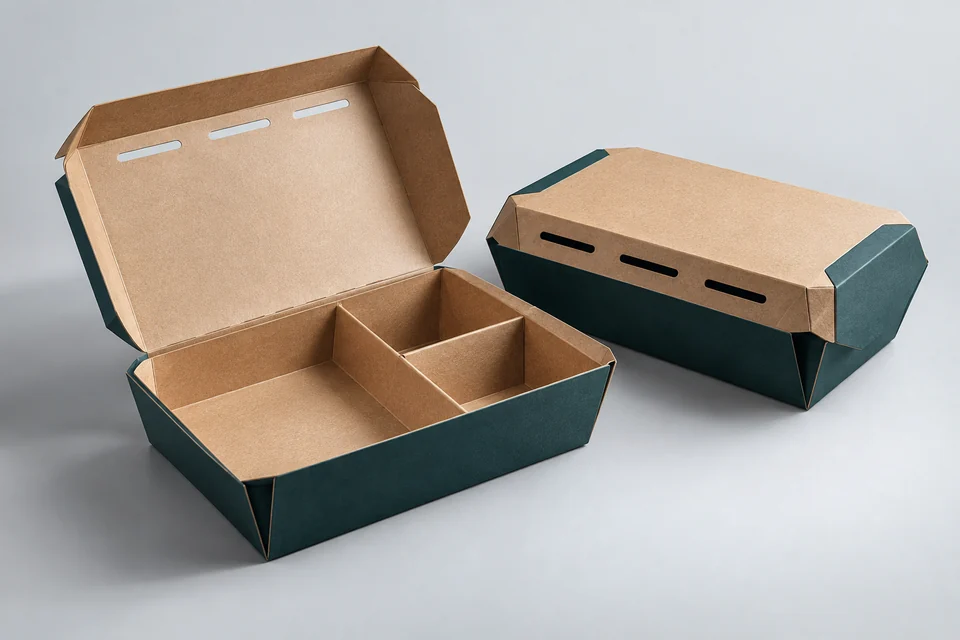
Takeout food containers need to fit portions, be easy to close and convenient to open. During rush hours, a difficult-to-install item can slow down the counter. Please choose the lid and compartment from the actual serving method.
See the process from kitchen to guests
Write down the steps to take the box, divide the dishes, close the lid and fold the bag. Pre-built boxes or custom built boxes? Does the lid get in the way when serving dishes? Does the counter have enough space for boxes and removable lids? These points help in texture selection.
Test for correct portion sizes and serving utensils, including overhangs, toppings and add-ons. The volume listed on the sample does not indicate how the item will lie.
Choose the lid according to how the customer receives and opens it
| Organization type | Benefits to check out | Risks need to be observed |
|---|---|---|
| Seamless lid | Reduce the need to find the lid | The lid gets in the way when serving dishes |
| Removable lid | Flexibility when preparing at the counter | Wrong size or missing cap |
| Buckle | Can keep image when closed | Difficult to install when box is too full |
Check the lid after the expected waiting time. The recipient needs to know the opening direction and not have to pull hard to tilt the box. The locking clasp keeps the lid closed, proving the container is airtight for watery dishes.
The divider needs to serve the way you eat
Partitions need to serve the way of eating and limit mixing dishes as required. If the sauce easily overflows when tilted, check the height, tightness or separate sauce box. A dividing wall does not automatically create two sealed compartments.
The steam vent needs to match the dish and the waiting time. Test the quality of the dish after packaging, not just the box when first used; adding more holes is not always better.
Small trial run during service shift
In a test case, record the incorrectly placed box, the lid that needs to be re-installed, and the closing time. Arrange multiple boxes in an outer bag, then ask someone to open them. This is an operating test, not changing material safety records.
With a two-compartment lunch box with sauce, if the delivery is overflowing, you need to check the wall or separate the sauce box. Increasing the entire box size may not resolve the cause.
Browse the structure on the selected material
Materials need to be pegged according to item and contact conditions; see Food box material selection lesson. Then check the lid and upper compartment of the last box. Changing dishes or reheating methods needs to be reviewed.
Send SquareBag sample servings and procedures at the counter so we can try out the right box for your serving style.
Explore Food paper box in the SquareBag category.
Exchange specifications with SquareBagAll articles